
Ammonium hydroxide (NH4OH, CAS 1336-21-6) is ammonia dissolved in water — in commerce almost always sold and labelled by its ammonia strength rather than as a true hydroxide. At 28% NH3 it is the "aqua ammonia" of the fertiliser trade and of flue-gas NOx scrubbing; dilute grades are used to pH-adjust boiler feedwater, extract metals, purify water and develop photographic film. It is also a raw material for rayon and other textile fibres, pharmaceuticals, paper, rubber, detergents and printing inks. Buyers normally specify strength and grade rather than "purity": 28% technical and 10% household are the common strengths, 16/20/26% are catalogued alongside NF and FCC grades, and USP strong ammonia solution runs 27-30% w/v NH3.
Escenarios de aplicación
- Fertiliser application and NOx flue-gas scrubbing
- Rayon and textile fibre manufacturing
- Pharmaceutical, paper, rubber and detergent production
- Water purification and metal extraction
- Photographic development
- pH adjustment of boiler feedwater and process streams
Sourcing notes for buyers
- Industrial ammonia solution is bought by NH₃ strength rather than by "purity": 20%, 25% and 28% are the standard commercial grades, each with its own vapour pressure and freezing behaviour.
- A 28% solution carries meaningful ammonia vapour pressure at summer ambient temperatures, so containers must be vented or pressure-rated for both transport and storage. Sealed drums left in direct sun are a genuine hazard.
- Liner choice is decided by compatibility: ammonia attacks copper, brass and many zinc-coated surfaces, while mild steel, stainless steel and polyethylene-lined containers are the standard options.
- The COA should cover NH₃ assay, residue on evaporation, iron and chloride. Iron and chloride are what limit a grade’s use in electronics, pharmaceutical and catalyst preparation.
- Shipments are classified as corrosive (UN 2672 for 10–35% solutions). Confirm the ADR/IMDG paperwork and the receiving site’s bunding before the first delivery.
- For NOx scrubbing and fertiliser use, buyers also compare free NH₃ against total ammonia at the injection temperature — the same 25% solution behaves differently in a cold line than in a warm one.
| Compound | Ammonium Hydroxide | Catalog No. | SA-1336216 | CAS No. | 1336-21-6 |
|---|---|---|---|---|---|
| Grade | Technical / NF / FCC |
| Common strength | 28% NH3 (aqua ammonia) |
|---|---|
| USP strong solution | 27 - 30% (w/v) NH3 |
| HS Code | 2814.20 |
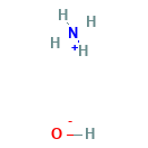
| Nombre IUPAC | azanium hydroxide |
|---|---|
| Fórmula molecular | H5NO |
| Masa molecular | 35.046 |
| InChIKey | VHUUQVKOLVNVRT-UHFFFAOYSA-N |
| SMILES | [NH4+].[OH-] |
Peligros principales
 Corrosive
 Environmental Hazard
- H314Causes severe skin burns and eye damage
- H400Very toxic to aquatic life
La clasificación de peligros se reproduce del conjunto de datos de origen. Confirme siempre con la ficha de datos de seguridad (FDS) del proveedor antes de manipularlo.
Sinónimos
- ammonium hydroxide
- 1336-21-6
- Ammonia water
- Ammonia aqueous
- Aquammonia
- Ammonia, aqua
- Household ammonia
- NH4OH
- Ammonia, monohydrate
- Ammonia water 29%
- SX 1 (ammonia water)
- Ammonium hydroxide ((NH4)(OH))
- DTXSID4020080
- CHEBI:18219
- +46 más
Todavía no hay ningún proveedor verificado vinculado a este producto, pero puedes publicar una solicitud de compra — los proveedores chinos que coincidan te enviarán cotizaciones directamente.
Publicar una solicitud de compra